“Action is the Antidote to Despair”: Our Evolutionary Impulse to Help Others When Things Get Difficult
Since the Veterans Administration first acknowledged post traumatic stress disorder as a clinical disorder and its subsequent inclusion in the Diagnostic and Statistical Manual of Mental Disorders in 1980, a great deal of psychological literature has discussed the impacts of adverse events on the human mind and body. In response to studies that came out after the events of September 11, 2001 and Hurricane Katrina, much of that research has focused on factors that create the best circumstances for recovery from such adverse events, a phenomenon known in the literature as post-traumatic growth. These latter studies have been built on the premise that trauma is not necessarily what happens to a person or community as a result of an adverse experience, but instead what changes inside them – via thoughts about the world or ways their minds and bodies handle stress in the future. An important finding for practical application has been that these changes are often experienced less intensely, for a shorter period, and even prevented altogether when those who are impacted by an adverse event take even small actions that have the potential to help themselves or others in their communities.
The Evolutionary Explanation
Our bodies and brains evolved their amazing capabilities under very different circumstances than the societies in which many of us live today. Homo sapiens (the Latin name for modern humans) evolved in our present form about 300,000 years ago, but it was only 12,000 years ago that the agricultural revolution caused some of us to start working longer and harder days in the fields, and others of us began to go into niche specialties to support the economies and larger groups of people that came with that change. We now moved around less and were required to be in connection with larger groups of people. Most of us also became responsible for fewer types of tasks, but those tasks were done more often – like a person responsible for making farming tools but who now relied on someone else to know the best way to cultivate food. In essence, our lives were less diverse and more predictable. To paraphrase the historian and philosopher Yuval Noah Harari, “We did not domesticate wheat. It domesticated us.” (2015, p. 97).
Prior to the agricultural revolution, the long period during which our brains were evolved and survival of the fittest determined what traits would be passed down, we were hunter-gatherers spent much of our time engaging our innate curiosity and building on shared goals in small groups – leading to strong feelings of efficacy and an interdependence among people and their natural surroundings. With this lifestyle came a default emotional setting of calm, trust, and a sense of mutual purpose. Our brains were still designed to engage in a relatively quiet and calm lifestyle in which, despite harsher conditions, it is estimated we only worked about 25 to 30 hours per week.
When Things Got Difficult
These long stretches would be occasionally punctuated by more stressful events like going on a hunt or defending against a predator. In those short, but much higher intensity moments, natural processes in our brains caused a surge of stress hormones that helped our bodies jump into action to either engage in battle (fight) or run away (flee). Following these brief bursts of action, we would then stay moving – moving, cleaning, and preparing the prey we’d killed; helping each other repair weapons; and further processing the big event through communal, embodied activities like telling stories, making music, and dancing.
Through the time that followed the big event, our brains and bodies were able to process the original stressor, dissipating remaining physical energy, and see the adverse event to the end of its emotional and physiological cycle. This produced a sense of accomplishment which re-enforced self-efficacy and reduced the likelihood that the energy surge would stay in our bodies. We’d return to the default state where our bodies had fully processed the stress and began to prepare for the next round. It was a cycle that allowed us to surge during big moments, then fully recover with limited long term impacts, and sustain our energy and optimism in the long term.
Those of us that were exposed to the big stressors but were unable to use the physical energy surge to take action often experienced a systemic override, causing us to numb out (freeze) or engage in actions that seemed unnatural (fawn). These actions were also nature at work; with narrowing options for survival, our bodies would flood with feel good hormones to reduce pain and/or cause us to take illogical actions as a last resort to survive.
The Modern Equivalents
Though few of us these days ever risk our lives to fight or flee a predatory animal, these four results of hormone release, fight, flight, freeze, and fawn, are still built into our evolutionary circuitry. The first two are favored by nature to help complete the stress cycle and one of the reasons that we tend to feel better not when we think about a problem, or even talk about it, but instead when we try to do something about it. This could be something like diffusing nervous energy by engaging in action only – taking a brisk walk or cleaning the house to dissipate the physical surge of energy in our bodies. But an additional factor in play in our ancestors’ scenario was the further dissipation of stress through re-connection – using the experience to build something for the future – be it a meal, a lesson for the group, or a creative act.
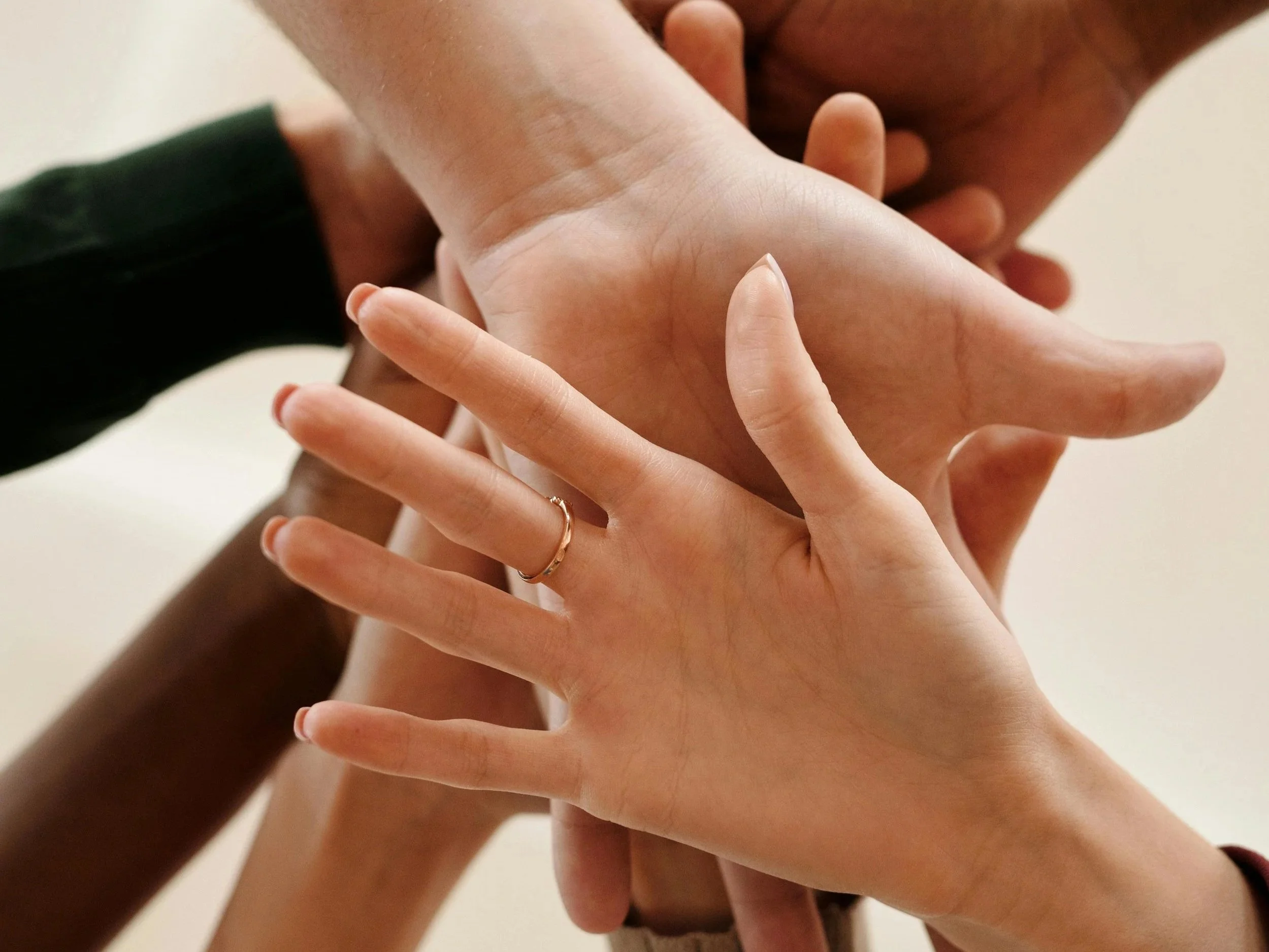
This additional factor is the reason that those of us who are impacted by adverse events often experience less intense, shorter, and less frequent negative impacts when we are able to engage our bodies in some sort of action, particularly if that action helps others. From a person who can say that at least they tried to fight off their attacker and then tells the story as a way to advocate against violence to a survivor of a major weather event who jumps into action to rescue others and later joins the effort to rebuild homes, those who feel like they did something with their experience won’t say they didn’t wish the event hadn’t happened, but they will often say that at least they feel like they did something good with what came out of it. Instead of a core belief of “I am powerless”, they cultivate the belief that “I can do something to help.” They often find community with those who have experienced the same event and forge beliefs that they care about others, and others care about them. These processes may not create happiness, but it does create integrity which often has more staying power as a way to build resilience against future impacts of the stressor.
Action is the Antidote to Despair
How is this information about the natural processes of our brains and bodies useful in our current world, where we often feel helpless in the face of social, political, economic, and environmental realities? It teaches us that Joan Baez, the famous American folk singer and activist, knew what she was talking about when she said “action is the antidote to despair”. When we volunteer for a cause or political figure we believe in, take tangible steps to help a person in our community, or put our brains and bodies to work attempting to repair and improve that which is broken, we can process the stress that resides in our bodies and take immediate action to counteract pessimistic thoughts before they become more at home in our minds. Actions that involve others are especially impactful. In doing so, we feel better and help others in the process.
Our modern life is full of stressors, including interpersonal ones and larger systemic stressors like environmental, economic, and political realities. Dr. “E” Elisa Woodruff (she/they) has extensive experience working with clients impacted by both acute and systemic traumas, including those who identify as marginalized due to their internal and external identities, and helping them rebuild their confidence in both themselves and others. Dr. Woodruff holds certificates in Neuropsychotherapy (exercises that help to strengthen and balance the brain), EMDR (Eye Movement Desensitization and Reprocessing), the Assessment and Treatment of Attention Deficit Disorder, and Insomnia. They also practice a cannon of tried and true talk therapies, especially cognitive and psychodynamic models. Dr. Woodruff is currently taking new clients. Call 630-297-7559 to set up an appointment!